Can the Mahabharata offer a blueprint for twenty-first century classrooms? A Kalyani-based education researcher believes it can-and his answer has now found a place in an international peer-reviewed journal.
Kinjal Chakraborty’s research, which reinterprets the ancient Indian epic as a sophisticated model of educational psychology rather than merely a religious or literary text, has been published in the British Journal of Contemporary Research, a UK-based academic journal.
Advertisement
The paper, titled Transmythopoetic Pedagogy of the Mahabharata: Reconceptualizing Procedural Epistemology, Mythopoetic Learning and Indic Academia through Epic-based Epistemology, argues that the Mahabharata offers a transformative learning framework centred on wisdom, ethical reasoning and lived experience—qualities that, according to the study, remain underemphasised in contemporary education.
Published by London-based Bexford Publishing Ltd, the research examines how the epic anticipates several modern educational theories, including experiential learning, constructivism, narrative psychology and transformative education. Instead of viewing learning as the accumulation of information, the paper presents it as a process of reflection, dialogue, moral inquiry and self-discovery.
One of the study’s key contributions is the Mahabharata Pedagogical Integrity Model (MPIM), a conceptual framework that proposes learning as a recurring cycle of experience, dilemma, dialogue, action, reflection and transcendence. The model distinguishes knowledge from wisdom and argues that value-based education should remain at the core of meaningful learning.
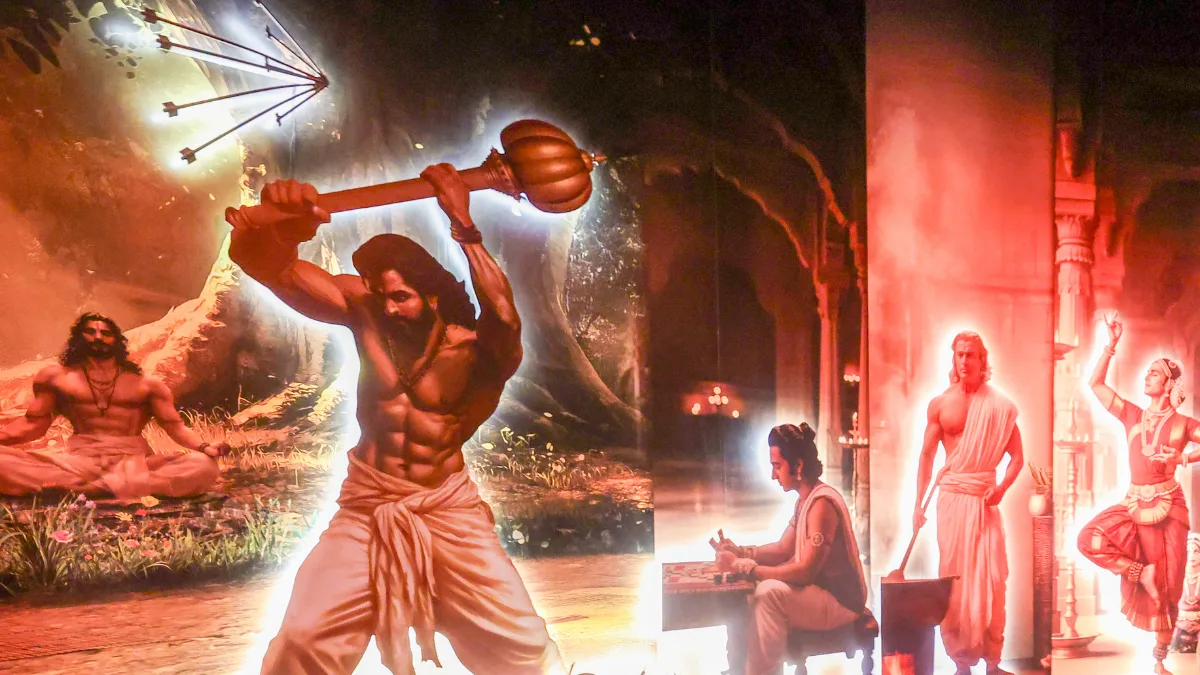
The paper also analyses how characters such as Arjuna, Krishna, Yudhishthira, Karna and Draupadi represent different dimensions of cognitive, emotional and ethical development. According to the study, the Mahabharata teaches learners not through rigid prescriptions but by engaging them with complex moral dilemmas that demand critical thinking and reflective judgement.
Among its recommendations, the research calls for classrooms where teachers function as facilitators of insight rather than mere transmitters of facts, curricula engage students with authentic human challenges, and assessments measure judgement, reflection and ethical reasoning instead of rote memorisation.
Chakraborty, a visiting faculty member in the Department of Education at Kalyani Mahavidyalaya, said the objective of the research was to create a meaningful dialogue between India’s classical knowledge systems and contemporary educational psychology. He hopes the framework will contribute to curriculum development, educational research and value-based pedagogy by demonstrating that the Mahabharata remains not just an ancient epic, but a living educational text with enduring relevance.